 +91 63523 57694
Movement-preserving care
Disc
Replacement
A considered surgical option for selected patients with a damaged spinal disc.
Understanding the procedure
What is Disc
Replacement?
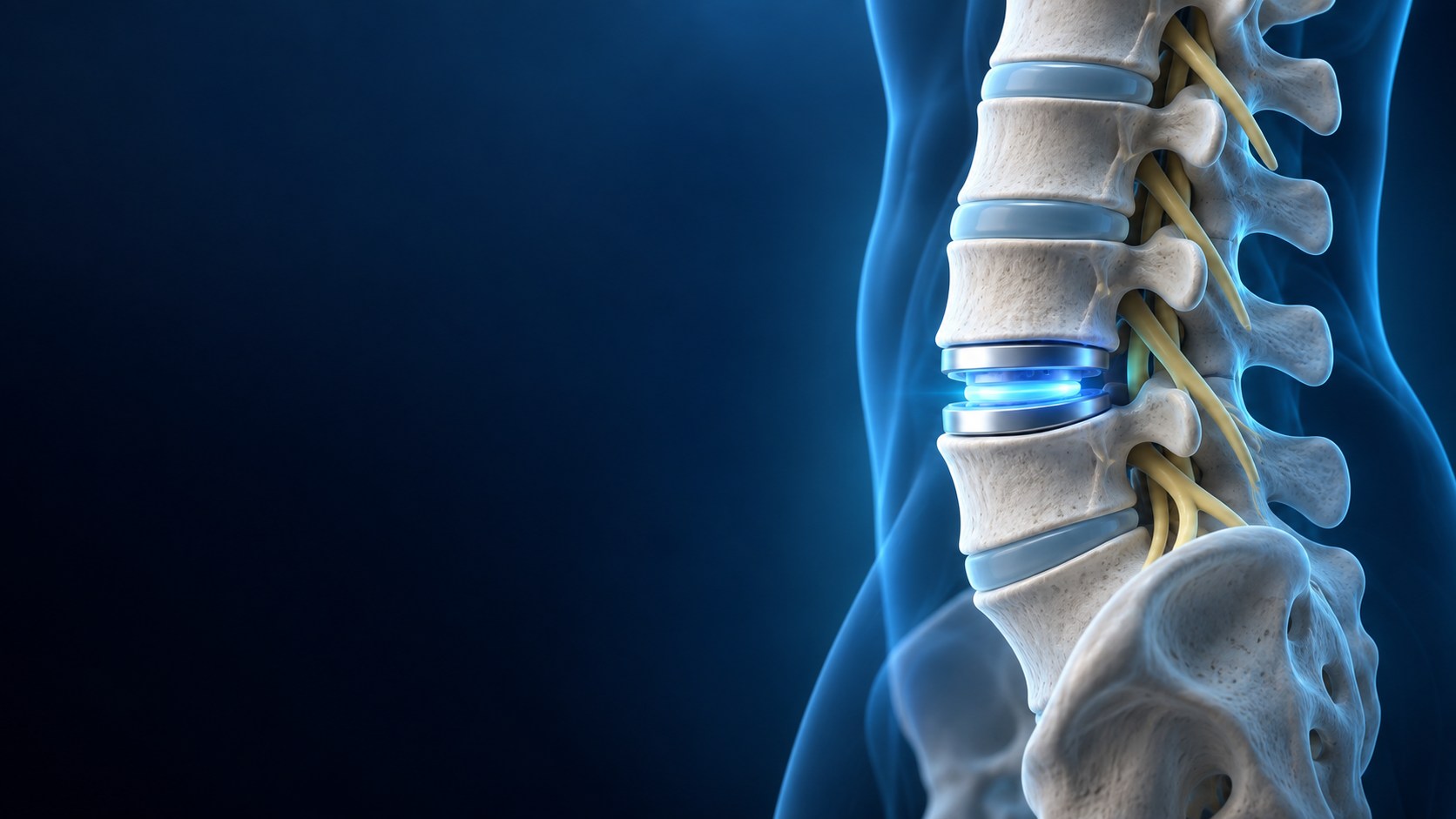
Disc replacement, also called artificial or total disc replacement, is a procedure in which a damaged spinal disc is removed and replaced with an artificial disc implant.
For carefully selected patients, the aim is to relieve symptoms while maintaining movement at the treated spinal level. Whether it is appropriate depends on the condition of the disc, overall spinal alignment, symptoms, and a detailed specialist assessment.
Confirm the source of symptoms.
Address the affected disc level.
Support stability and motion.
The procedure journey
Common Disc
Replacement.
From detailed diagnosis to recovery planning, every stage is considered around the individual patient and the condition of their spine.
01 Patient Evaluation
Before surgery is considered, a specialist review can include medical history, physical examination, and diagnostic imaging to assess the affected disc and determine whether disc replacement may be suitable.
02 Surgical Approach
The surgical approach is planned around the spinal level being treated and the patient’s anatomy, with the aim of accessing the disc safely and precisely.
03 Disc Removal
The damaged disc is carefully removed while the surrounding spinal structures are protected as part of the planned procedure.
04 Artificial Disc Implantation
An artificial disc implant is positioned at the treated level. The implant selection and placement are planned to support alignment, stability, and movement.
05 Recovery
Recovery includes follow-up, activity guidance, and rehabilitation when required. Timelines vary according to the procedure and the individual’s progress.
Individual treatment pathway
Treatment of
common Disc
Replacement.
The decision to proceed is made after careful review of symptoms, imaging, disc health, spinal alignment, and previous treatment response.
-
01
Patient Evaluation
A detailed consultation and diagnostic review establish whether disc replacement is an appropriate option.
-
02
Conservative Management
Non-surgical options may be considered first, depending on the condition and the severity of symptoms.
-
03
Surgical Evaluation
When symptoms persist, a specialist considers the likely benefits, risks, and suitability of surgery.
-
04
Disc Replacement Surgery
For selected patients, the affected disc is replaced with an implant designed for the planned spinal level.
-
05
Rehabilitation & Recovery
Follow-up care and activity progression support a safe return to daily movement.