 +91 63523 57694

Targeted nerve-pain care
Care for
Sciatica.
Clear assessment and a personal treatment plan for pain travelling from the lower back into the leg.
Understanding the symptom
What is
Sciatica?
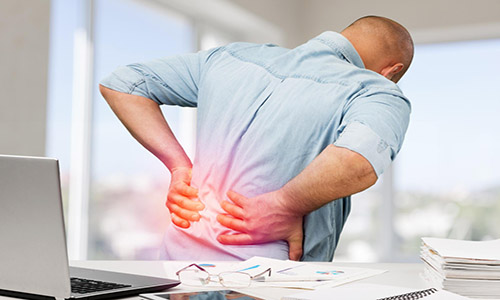
Sciatica describes pain that follows the path of the sciatic nerve—from the lower back through the buttock and down the back of one leg. It is a symptom rather than a diagnosis on its own.
It can be associated with irritation or compression of nerve roots in the lower spine. Symptoms may include pain, tingling, numbness, or weakness, and can vary from mild discomfort to severe shooting pain.
Lower-back pain · Leg pain · Tingling · Numbness · Weakness
Possible causes
Common
Sciatica.
Sciatic nerve symptoms can come from several conditions in or around the lower spine. A clinical assessment helps identify the likely source.
01 Herniated Disc
A herniated or bulging disc in the lumbar spine can irritate nearby nerve roots, including the roots that form the sciatic nerve.
02 Spinal Stenosis
Narrowing within the spinal canal or nerve passages can place pressure on nerves and may contribute to leg pain or walking-related symptoms.
03 Degenerative Disc Disease
Age-related disc changes can affect disc height and stability, sometimes leading to irritation of a nearby nerve root.
04 Spondylolisthesis
This is a forward slip of one vertebra relative to another, which can narrow the nerve pathway and cause symptoms in selected cases.
05 Piriformis Syndrome
Irritation around the piriformis muscle in the buttock can produce pain that resembles sciatica, even when the source is outside the spine.
Personalised treatment options
Treatment of
common Sciatica.
Care is tailored to the cause, intensity of symptoms, neurological findings, and response to previous treatment.
01 Pain Medication
Medication may be considered to help manage pain and inflammation, under advice from an appropriate clinician.
02 Physical Therapy
Guided movement, strengthening, and flexibility work can support recovery and help patients return to activity safely.
03 Heat & Cold Therapy
Heat or cold may offer short-term symptom relief for some people as part of an overall management plan.
04 Epidural Steroid Injections
For selected patients, injections may be considered to reduce inflammation around an irritated nerve root.
05 Lifestyle Modifications
Activity guidance, posture, ergonomics, and weight management may help reduce strain on the lower spine.
06 Surgical Intervention
Surgery may be considered when symptoms are severe, progressive, or do not improve with appropriate non-surgical care.