 +91 63523 57694
Urgent specialist care
Spine
Trauma
Focused assessment and timely treatment planning for injuries affecting the spine.
Understanding the injury
What is Spine Trauma?
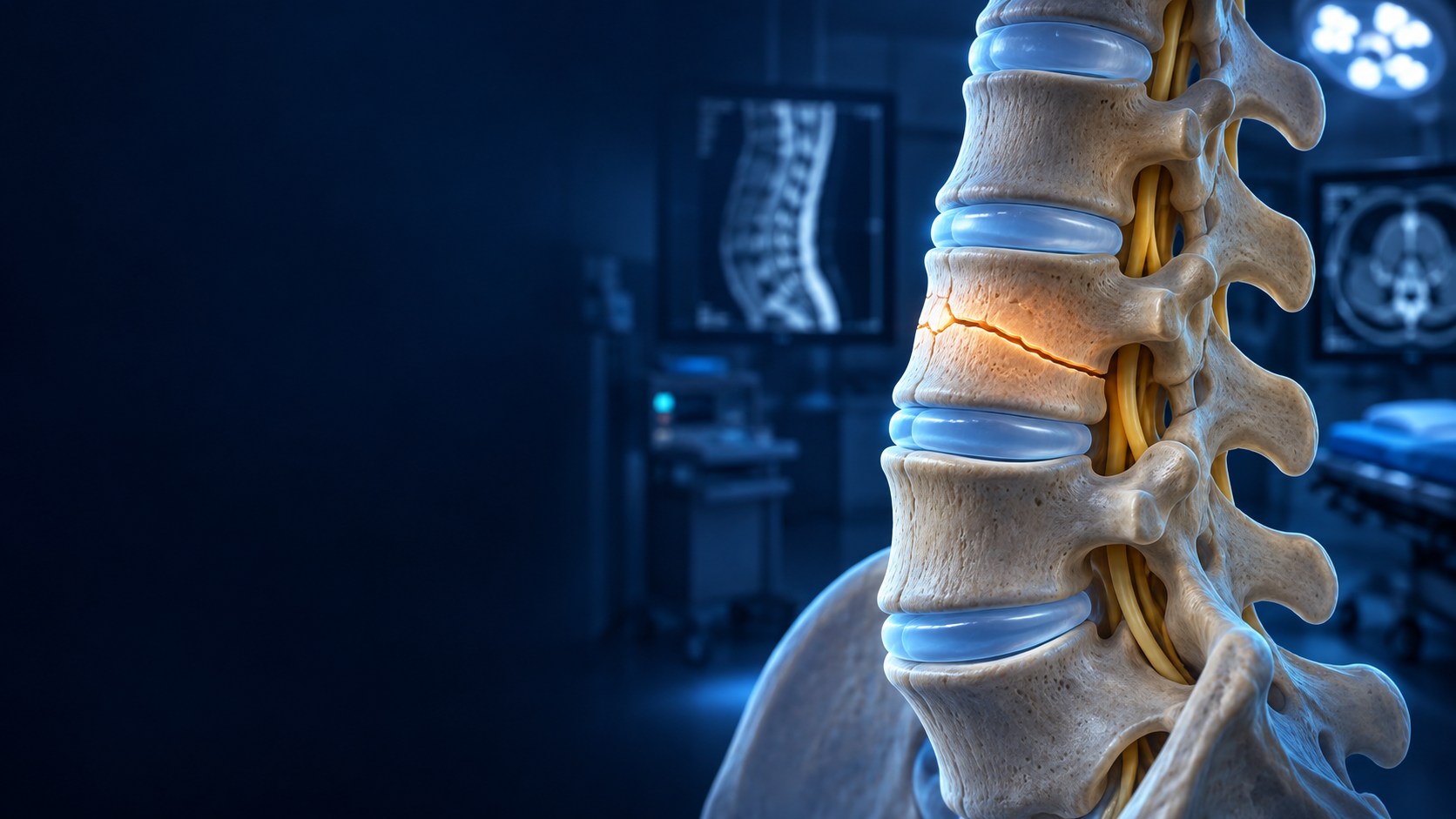
Spine trauma is an injury to the spinal column or spinal cord. It can occur after incidents such as falls, road accidents, sports injuries, violence, or other medical emergencies.
Injuries can range from a relatively minor strain to serious damage involving the vertebrae, nerves, or spinal cord. A prompt clinical assessment helps identify the injury and guide the next step in care.
Types of injury
Common
spine trauma.
Each injury needs a careful assessment. Open a condition to understand how it may affect the spine and why timely specialist care matters.
New weakness, numbness, loss of balance, or bladder/bowel changes require urgent medical attention.
01 Fractures
Vertebral fractures can follow a fall, a collision, or another forceful impact. They range from stable compression injuries to more complex fractures that can affect spinal stability or nearby nerves.
02 Dislocations
A dislocation occurs when spinal bones move out of their normal alignment. It can be associated with ligament injury and should be assessed promptly to check stability and possible nerve involvement.
03 Spinal Cord Injury (SCI)
Spinal cord injury may affect movement, sensation, or body functions below the level of injury. Early emergency assessment and coordinated care are essential.
04 Whiplash
Whiplash is a neck injury caused by a rapid back-and-forth movement, often after a collision. Symptoms can include neck pain, stiffness, headaches, and reduced movement.
05 Penetrating Injuries
Penetrating injuries can damage bone, nerves, blood vessels, or the spinal cord. They require immediate emergency evaluation and a multidisciplinary treatment plan.
Treatment planning
Treatment of
common spine
trauma.
Treatment depends on the location and severity of injury, spinal stability, symptoms, and overall health. Every plan begins with a detailed specialist assessment.
01 Fractures
Selected stable fractures may be managed with rest, bracing, pain control, and close follow-up.
More complex or unstable fractures may need stabilisation or decompression when clinically indicated.
02 Dislocations
Dislocations require urgent assessment. Treatment may involve careful realignment, immobilisation, and, where needed, surgical stabilisation to protect spinal structures.
03 Spinal Cord Injury (SCI)
Care can include emergency stabilisation, imaging, management of pressure on the spinal cord, surgery in selected cases, and a coordinated rehabilitation programme.
04 Whiplash
Whiplash is commonly managed with clinical review, symptom control, and guided return to movement. Further assessment may be needed if pain or neurological symptoms persist.
05 Penetrating Injuries
These injuries need immediate emergency care. Management is determined by the structures affected and may involve surgical and multidisciplinary treatment.